
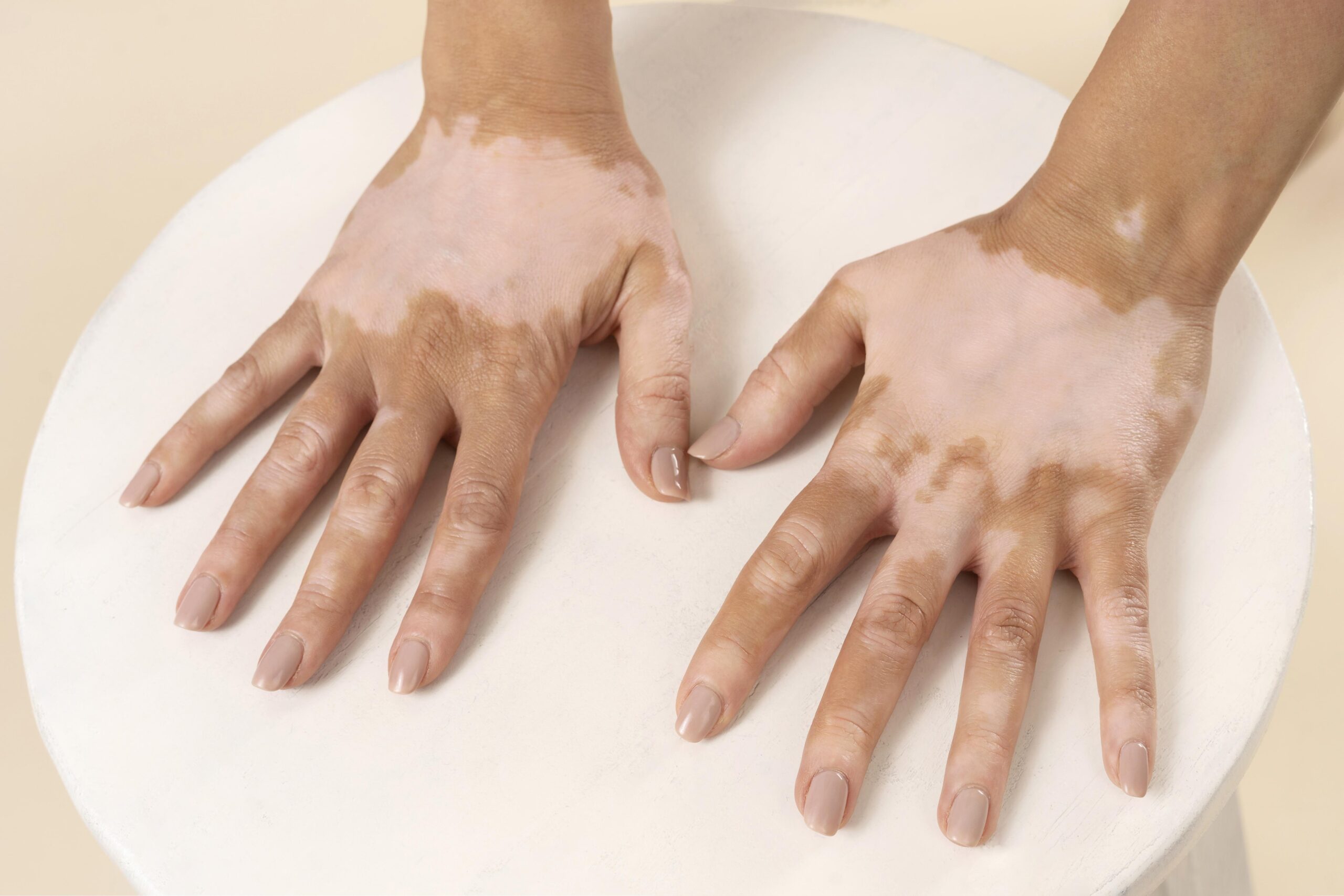
What is Vitiligo?
Vitiligo is a skin condition that causes patches of skin to lose their color. These patches can appear anywhere on the body. Usually, the skin turns lighter or white in these areas. Vitiligo affects people of all ages and skin types. However, it may be more noticeable in people with darker skin. According to the World Health Organization (WHO), vitiligo is not contagious or life-threatening. Still, it can affect a person’s confidence and emotional well-being.
Common Symptoms of Vitiligo
Vitiligo symptoms often start with small, pale spots on the skin. Over time, these spots may grow or join together. For many people, the first signs appear on the hands, face, or around body openings like the mouth or eyes. In addition, some people notice changes in hair color, such as white or gray hair on the scalp, eyelashes, or eyebrows.
Although vitiligo symptoms in adults and children are similar, the speed and pattern of color loss can vary.
Causes and Risk Factors
Doctors do not know the exact cause of vitiligo. However, most experts believe it is an autoimmune condition. This means the body’s immune system attacks its own pigment cells, called melanocytes. As a result, these cells stop making melanin, which gives skin its color. Genetics may also play a role, as vitiligo sometimes runs in families. In addition, certain factors may increase the risk:
Even though these factors may raise risk, anyone can develop vitiligo.
How Vitiligo is Diagnosed
Doctors diagnose vitiligo by looking at the skin. They may use a special lamp, called a Wood’s lamp, to see the patches more clearly. Sometimes, a small skin sample (biopsy) is taken to rule out other conditions. Blood tests may also check for related autoimmune diseases. Early diagnosis helps with better management and treatment planning.
Treatment Options for Vitiligo
There is no cure for vitiligo, but several vitiligo treatment options can help restore skin color or slow its spread. The choice depends on the size, location, and number of patches. Some common treatments include:
Because each person is different, a dermatologist can help choose the best treatment plan.
Lifestyle Tips and Coping Strategies
Living with vitiligo can be challenging, but there are ways to manage vitiligo and boost confidence. For example, protecting your skin from the sun is important. Sunburn can make patches more noticeable. Here are some helpful tips:
With the right support, many people lead full and active lives.
Prevention and Myths
Currently, there is no known way to prevent vitiligo. However, early treatment may help slow its progress. It is important to know that vitiligo is not caused by poor hygiene or eating certain foods. Some common myths include:
According to the Centers for Disease Control and Prevention (CDC), understanding the facts can help reduce stigma and support those living with vitiligo.
In summary, vitiligo is a common skin condition with many treatment options. If you notice changes in your skin, consult a dermatologist Aira Skin & Derma Clinic for personalized advice on vitiligo.